
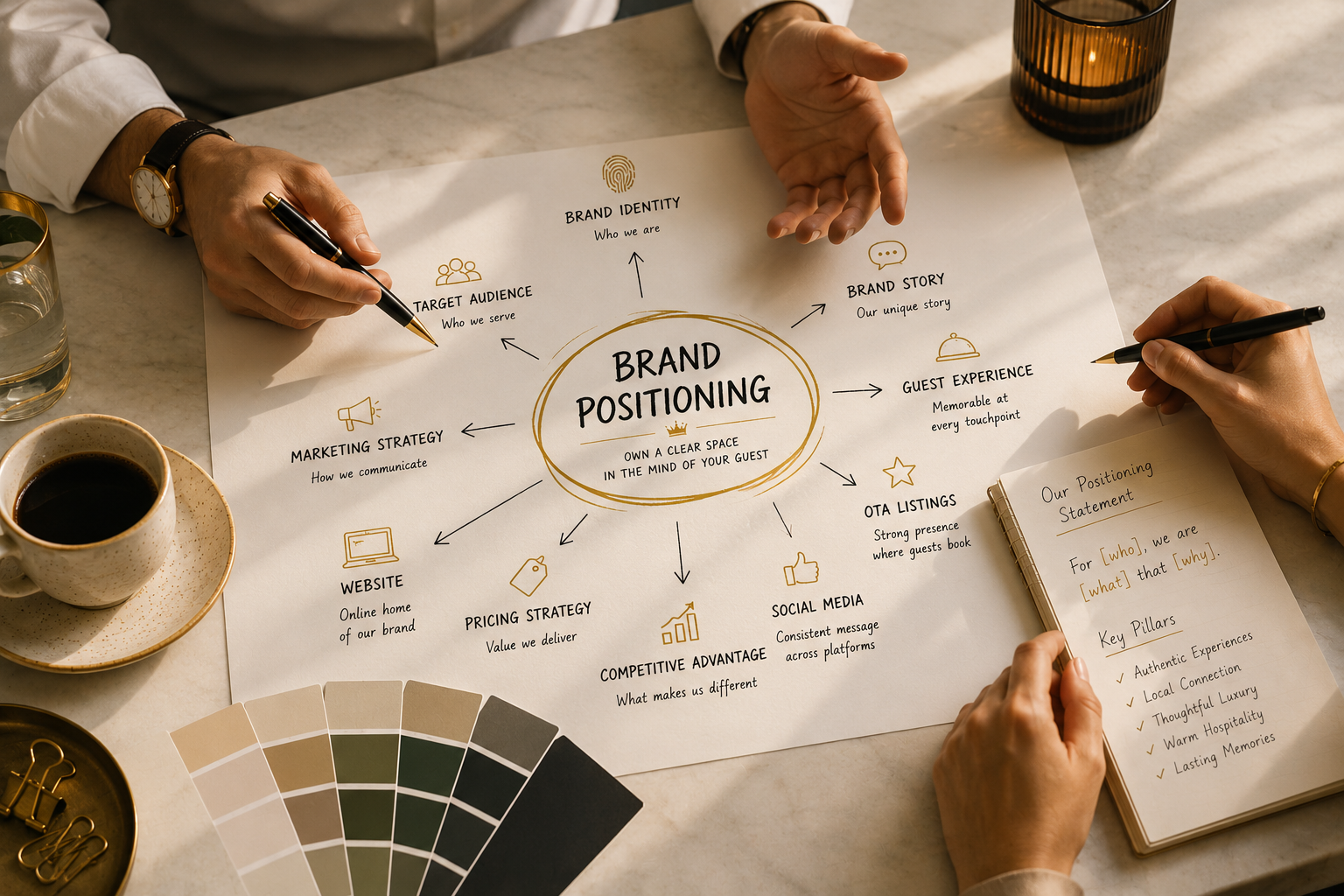
Ask ten hotel owners what makes their property special, and most will say the same handful of things: great service, a beautiful location, a warm welcome. All true — and all said by everyone else. That’s the problem brand positioning solves.
What is brand positioning?
Brand positioning is the space your brand occupies in the mind of your customer. It’s not your logo or your colours — it’s the one clear idea people associate with you, and the reason they choose you over the place down the road.
For a hospitality business, strong positioning answers three questions before a guest ever books: Who is this for? What makes it different? Why should I trust it? Get those answers clear and consistent, and everything else — your photos, your captions, your pricing — suddenly has a job to do.
Why most properties skip it (and pay for it later)
Positioning feels abstract, so owners jump straight to the visible things: posting on Instagram, running an advert, redoing the website. But without positioning underneath, those efforts pull in different directions. The Instagram says ‘fun and lively’, the website says ‘quiet and exclusive’, the OTA listing says ‘great value’ — and the guest, feeling the mismatch, quietly moves on.
When every touchpoint tells the same story, trust builds. When they don’t, you become invisible — even with a wonderful product. That consistency is what connects a brand and makes it lasting.
How to position your hospitality brand — 4 steps
1. Know exactly who you’re for. A boutique hotel for honeymooning couples is a different brand from one for families — even with the same rooms. Choose, and speak to them.
2. Find your genuine difference. Not ‘great service’ — something true and specific. A farm-to-table restaurant on a working farm. A spa built around one rare local treatment. A villa with the best sunset on the west coast.
3. Write one positioning statement. A single sentence: for [who], we are the [what] that [why]. Everything you publish should fit it.
4. Make every channel match. Your website, social, OTA listings and Google profile should all reflect the same positioning — the same story, the same tone, the same promise.
A simple example
Imagine two beachfront villas, side by side, same price. One markets itself as ‘a luxury villa in Phuket’ — generic, forgettable. The other positions itself as ‘a barefoot-luxury retreat for families who want the beach on their doorstep and no shoes for a week’. Same villa. But the second has a clear guest in mind, a genuine difference, and a story — and it will win the booking from the right family every time.
Getting positioning right is the foundation of everything we do for the hotels, restaurants and spas we work with. It’s the first thing we build in our Signature Brand Blueprint — and everything else flows from it.
Leave a Reply